
Top 7 Social Media Marketing Platforms – The Ultimate Guide

With the emergence of the digital age, there is one thing that has become a must for every business.
And that is brand awareness marketing. You can’t expect customers to buy from you if no one knows about your brand. Nevertheless, the market today comprises a variety of competing apps.
Thus, it’s not enough for companies just to go online. They need to choose those social media marketing sites that match their needs and target audience.
The landscape of social media sites has changed. Companies have reached an era where posting things and hoping for the best won’t work.
There is a unique satisfaction derived from using each app along with its unique use for marketing purposes. As such, companies need to identify what social media advertising platforms give good returns on investment and what sites are more organic for them.
Here is your comprehensive guide on the top 7 social media marketing platforms.
Top 7 Social Media Marketing Platforms
Instagram: The Visual Marketing Tool for Identity
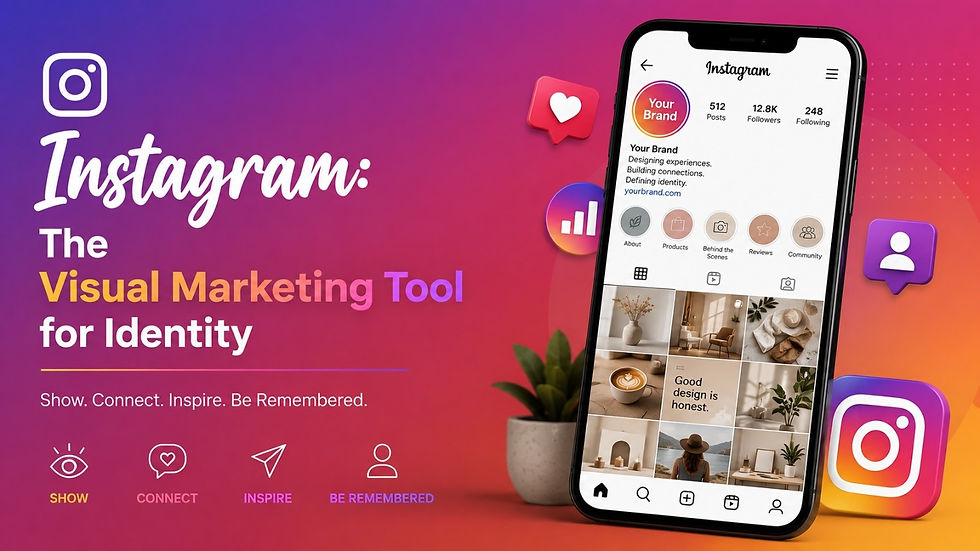
Considering social media platforms which could be used for marketing purposes for lifestyle, retail, and imagery creation, Instagram will continue to take precedence above others.
The monthly active users of the app are over 2 billion; hence, it has shifted from being just a photo-sharing app to a multi-faceted one consisting of Reels, Stories, and Shops.
What Makes It Good for Brand Building: Instagram is highly aspirational, and it allows brands to build "a vibe" or a particular aesthetic that people wish to associate themselves with. This makes it one of the most effective platforms for brand building services and visual storytelling.
Plan of Action: Discover through the use of Reels. Since the algorithm favors non-followers' Reels more, this is the best way to organically grow one's audience.
Advertising Advantages: As part of the Meta ecosystem, it definitely holds an upper hand when compared to other social media platforms for businesses owing to its precision in targeting.
TikTok: A Discovering Machine

If viral brand recognition is what you seek, there is no better marketing platform than TikTok in social media today.
While other social media networks base your visibility on your number of followers, the FYP on TikTok runs on the principle of meritocracy, where good-quality content equals visibility.
"The Unfiltered Edge": TikTok users love their content unfiltered. Brands that succeed on TikTok are those which ditch their staged content and go for behind-the-scenes videos.
Ability to Create Brand Awareness: TikTok possesses the ability to convert niche products into global phenomena (the "TikTok Made Me Buy It" effect).
For Companies: Make your brand human. Videos featuring your staff or showcasing your office workings do incredibly well on TikTok.
LinkedIn: Authority Building Platform for B2B

When it comes to discussions on best social media platforms for marketing, LinkedIn comes first to mind.
The purpose of LinkedIn has shifted from being a talent recruitment platform. Instead, it has become a content-sharing platform where the content builds your brand equity through thought leadership.
Professional Reputation: Not only does LinkedIn need to increase your visibility on the platform but rather it needs to build your reputation on LinkedIn as an authority within your industry.
Content: The kind of content that can help you on LinkedIn include blog posts, industry insights, and carousels.
Ad Campaigns: Though CPC costs on ads may be high compared to other platforms, the quality of leads you receive on LinkedIn remains unmatched.
Are You Looking for a Brand Strategy for Your Business?
Choosing the right social media platforms for businesses might be a tough job. That's why Moshi Moshi, a leading digital marketing agency in India specializes in selecting a proper platform for your business needs. Regardless if you are a startup trying to achieve some success or an enterprise trying to establish a professional reputation, we always design the campaign accordingly.
Facebook: The Platform of Unprecedented Reach

Though newer platforms have emerged, Facebook still remains a leader compared to all other social media marketing platforms.
It has almost 3 billion active users and that makes it a platform of a completely different caliber.
Group Formation: Facebook groups tend to get overlooked when it comes to promoting a brand. Establishing a community group based on the specific aspect of your brand will give you a group of devoted followers who would support your brand.
A Perfect Place for Local Businesses: If you are running a local brand, then Facebook is the place for you.
Advertising on Social Media: Facebook Ads Manager remains the undisputed king in retargeting campaigns.
YouTube – "Long-form" Platform

YouTube is the second-largest search engine on earth. Thus, YouTube will become one of the best tools to enhance brand awareness, which has "evergreen" capability.
That means, even a video that you post today will be able to increase brand awareness in five years' time.
Educational Awareness: How video production companies help with Videos or Tutorials can assist your brand in solving a problem of the users that they are seeking answers to.
YouTube Shorts: Due to rising competition from TikTok, YouTube makes an aggressive effort to promote its feature known as Shorts that helps in attracting the attention of users to longer videos.
Building Brand Trust: With just ten minutes' worth of viewing of the video, having a person's face and voice will build up more trust from the users than just a five-second look at an image.
Pinterest: The Visual Search Engine

Pinterest is not included in the list of social media platforms for businesses that can be utilized for marketing purposes, which is a mistake committed by D2C marketers.
Pinterest makes it possible for people to search for inspiration to make future purchases.
"The Planners": Pinterest is utilized to plan weddings, renovations of homes, and change in wardrobe. It means that once your product gets featured in the "inspiration board" of Pinterest users, you are halfway there.
Purpose of Use: Pinterest is different from all other social media platforms in the sense that ads served to people here are often helpful for people who are "planning."
Durability: One pin can last for months compared to the short life span of just hours or even minutes in case of Twitter.
X (formerly Twitter): The Conversation in Real-Time

For engaging with your customers in their “zeitgeist,” there’s nothing better than X. This is the best platform for instant interaction, information exchange, and customer service.
Instant Interaction: It’s only on X that a customer can mention the brand and get an instant response. In fact, it is very helpful in developing a “responsive” image of the company.
Educational Conversations: Starting educational conversations on X is the key to becoming viral on the platform.
Why Brand Awareness Is Important More Than Ever Before?
When operating in a competitive landscape, brand awareness forms your “protective moat.” This refers to a psychological advantage that helps customers make their decision in favor of the known product or brand.
Leveraging different social media marketing platforms gives you an opportunity to be present in all stages of the consumer's journey:
Awareness: TikTok & Instagram Reels.
Consideration: YouTube & Pinterest.
Purchase: LinkedIn & X.
Engagement: Facebook Groups.
Steps for Selecting the Best Social Media Platforms for Brand Awareness
Don’t get overwhelmed with trying to do too much at once. Use these three filters to pick your core networks:
Where is your audience?
If you are selling enterprise software, you can rack up some views on TikTok, but actual clients will come to you from LinkedIn. If you’re in fashion, then Pinterest and Instagram are mandatory.
Where is your strength?
Is your company headed by a charismatic founder who loves being on camera? Then you should stick with YouTube and TikTok. Are you in a data-driven business with great insights to share? Then you need to be using LinkedIn and X.
How many resources do you have?
Managing seven social media marketing networks would require a huge team. Begin with two networks—one organic network (TikTok), and one community/retargeting network (Facebook).
Scrolling to Scaling
We at Moshi Moshi don’t simply “manage accounts.” We create online personas. We know the difference between the "vibe" on TikTok versus the "voice" on LinkedIn. Trust us to guide you through the labyrinthine landscape of social media advertising platforms to discover where your brand really belongs.
Begin your quest at Moshi Moshi.
Determining Success: It’s Not Just About the “Like”
In order to track your success when you use the top social media sites to increase brand awareness, you must look beyond just selling your product or service.
Share of Voice: How many times did your brand get talked about in comparison with others in your field?
Reach/Impressions: How many different pairs of eyes did your content reach?
Sentiment: Is the sentiment around your brand favorable?
Visitors to your Profile: How many people clicked on the link in your content and then viewed your profile page?
Conclusion: The Multi-Platform Future
The truth is, there’s never going to be one “best” social media platform to market on. In 2026, brands will be able to reach the most success by embracing the omnichannel marketing approach where the content adapts to speak the language of every individual platform.
With a strategic implementation of the above 7 social media marketing platforms, you can make sure that your brand doesn’t become an option, it becomes the obvious choice.
Frequently Asked Questions (FAQs)
1. What are the best social media marketing platforms for businesses in 2026?
The top social media marketing platforms in 2026 include Instagram, TikTok, LinkedIn, Facebook, YouTube, Pinterest, and X (formerly Twitter). Each platform offers unique advantages depending on your business goals and target audience.
2. Which social media platform is best for brand awareness?
Instagram and TikTok are among the best platforms for building brand awareness due to their massive reach, engaging content formats, and strong organic discovery features.
3. Is LinkedIn suitable for B2C marketing?
While LinkedIn is primarily known for B2B marketing, B2C brands targeting professionals, entrepreneurs, and decision-makers can also benefit from thought leadership and industry-focused content.
4. Why is TikTok considered a powerful marketing platform?
TikTok's algorithm prioritizes engaging content over follower count, allowing businesses to reach large audiences organically and increase brand visibility quickly.
5. How can small businesses choose the right social media platform?
Small businesses should consider where their target audience spends time, the type of content they can consistently create, and their marketing objectives before selecting a platform.
6. Is Facebook still relevant for social media marketing?
Yes. Facebook remains one of the largest social media platforms, offering powerful advertising tools, community-building opportunities through Groups, and effective local business marketing features.
7. How does YouTube help with long-term brand growth?
YouTube content has a longer lifespan than most social media posts. Educational videos, tutorials, and product demonstrations can continue attracting viewers and generating leads for years.
8. What makes Pinterest different from other social media platforms?
Pinterest functions more like a visual search engine where users actively look for ideas and products, making it highly effective for businesses in fashion, home decor, beauty, and lifestyle industries.
9. Should businesses be active on multiple social media platforms?
Yes, but it's better to focus on two or three platforms initially. An omnichannel strategy works best when businesses tailor content to each platform rather than posting identical content everywhere.
10. How can businesses measure social media marketing success?
Key metrics include reach, impressions, engagement rate, website traffic, follower growth, brand mentions, share of voice, sentiment analysis, and conversions generated through social media campaigns.
Related Articles:


